

Keynotes
Title: The Quadruple Planetary Crisis
Dr. Ioannis Tsipouridis is a Renewable Energy Consultant Engineer with a B.Sc. in Chemical Engineering (1974), an M.Sc. in Fuel and Energy (1977), and a Ph.D. in Solar Energy (1978) from the University of Leeds, United Kingdom. He currently serves as a Senior Research Fellow at Strathmore University, Adjunct Professor at Great Lakes University Kisumu (GLUK), Project Manager of the IAM COMPACT and FUELPHORIA EU Horizon Projects, and Director of the Renewable Energy and Climate Change Research Center at TUM, Kenya, where he has been actively involved for the past eight years. With over 48 years of experience in renewable energy, Dr. Tsipouridis has played a significant role in advancing sustainable energy solutions and addressing climate change challenges. His previous leadership positions include serving as CEO of the renewable energy subsidiary of the Greek Public Power Corporation, Chairman and Director of the Greek Wind Energy Association, Advisor to the Greek Minister of Energy, and Board Member of the Center for Renewable Energy Sources (CRES). He is also the founder, editor, and publisher of the specialized energy magazines ANEMOLOGIA and Energy Point, as well as the e-mc2.gr energy and climate change portal.
Abstract
How can we create technologies to help us reflect on and potentially change our behavior, as well as improve our health and overall wellbeing both at work and at home? In this talk, I will briefly describe the last several years of work our research team has been doing in this area. We have developed wearable technology to help families manage tense situations with their children, mobile phone-based applications for handling stress and depression, as well as automatic stress sensing systems plus interventions to help users just in time. The overarching goal in all of this research is to develop intelligent systems that work with and adapt to the user so that they can maximize their personal health goals and improve their wellbeing.
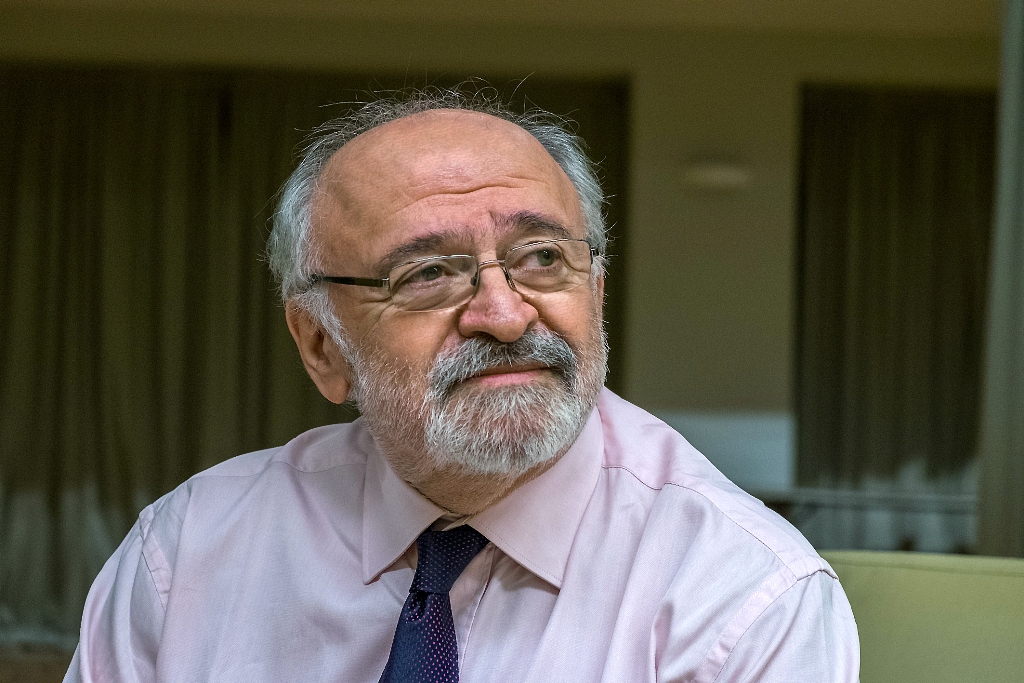
Dr. Ioannis Tsipouridis
Senior Research Fellow, Strathmore University, Kenya Director, Renewable Energy and Climate Change Research Center, Technical University of Mombasa (TUM), Kenya

Prof. Shegaw Anagaw Mengiste
Professor at the University of South-Eastern Norway
Title: Responsible and Ethical AI for Science, Technology, and Innovation in Sub-Saharan Africa: Opportunities & Challenges
Shegaw Anagaw Mengiste is a Professor of Information Systems at the University of South-Eastern Norway (USN) School of Business. He works on digital health, informatics and digital innovation, and has more than 25 years of experience in academia, research and technology consulting across Europe and Sub-Saharan Africa.
His career began at Addis Ababa University. He then earned a PhD in Information Systems from the University of Oslo, where his research looked at how computerised information systems take root in Ethiopia’s public health sector. He later held faculty posts at Aalborg University and the IT University of Copenhagen before joining USN in 2015.
Prof. Mengiste has led major international capacity-building programmes funded by NORAD, NORPART, EU Horizon 2020 and ERASMUS+. These include the NURTURE project on advancing the Sustainable Development Goals through higher education in Ethiopia, and the SEARCH project on action research in eHealth. His research on eHealth policy, health data quality and AI-driven diagnostics has appeared in journals including BMC Health Services Research, JMIR Medical Informatics and PLOS ONE. He also serves as an Academic Editor for PLOS ONE snd BMC Health Services Research!
He also works outside academia. He is Co-Founder and CEO of the African Digital Innovation and Technology Academy (ADITA) in Addis Ababa, and Senior Technology Consultant at AFRICOM Technology, where he advises on large-scale digital platforms, including national digital identity and e-government systems. Throughout his career, he has worked to bring research, policy and practice together so that digital transformation serves people and societies.
Abstract
The last years saw a steep increase in the number of wearable sensors and systems, mhealth and uhealth apps both in the clinical settings and in everyday life. Further large amounts of data both in the clinical settings (imaging, biochemical, medication, electronic health records, -omics), in the community (behavioral, social media, mental state, genetic tests, wearable driven bio-parameters and biosignals) as well as environmental stressors and data (air quality, water pollution etc.) have been produced, and made available to the scientific and medical community, powering the new AI/DL/ML based analytics for the identification of new digital biomarkers leading to new diagnostic pathways, updated clinical and treatment guidelines, and a better and more intuitive interaction medium between the citizen and the health care system.
Thus, the concept of connected and translational health has started evolving steadily, connecting pervasive health systems, using new predictive models, new approaches in biological systems modeling and simulation, as well as fusing data and information from different pipelines for more efficient diagnosis and disease management.
In this talk, we will present the current state-of-the-art in personalized health care by presenting cases from COVID-19 and COPD patients using advanced wearable vests and new technology sensors including lung sound and EIT, new outcome prediction models in COVID-19 ICU patients fusing X-Rays, lung sounds, and ICU parameters transformed via AI/ML/DL pipelines, new approaches fusing environmental stressors with -omics analytics for chronic disease management, and finally new ML/AI-driven methodologies for predicting mental health diseases including suicidality, anxiety, and depression.
